Automation & agents · Analysis
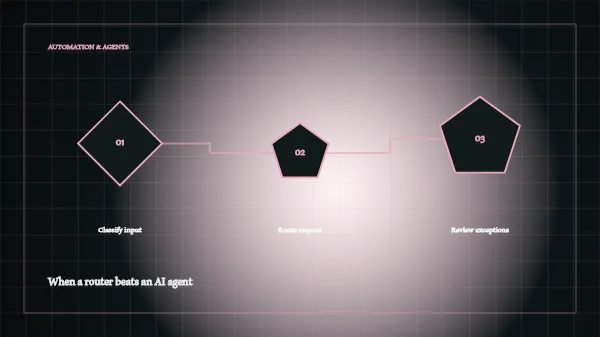
When a router beats an AI agent
A support-routing example shows where a fixed workflow helps and how to find the cases that actually need an agent.
Design AI agents and automations with clear permissions, retries, review and usage records.
Automation & agents · Analysis
A support-routing example shows where a fixed workflow helps and how to find the cases that actually need an agent.
Automation & agents · Analysis
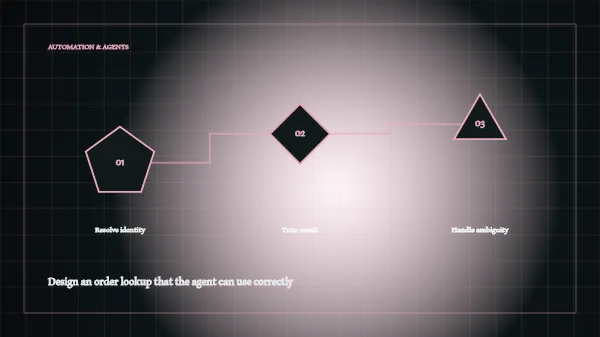
Turn search results into a small tool contract with explicit identifiers, timestamps and an ambiguous-match state.
Automation & agents · Analysis
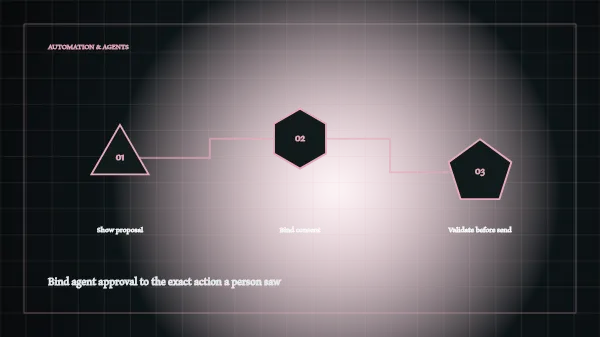
Use a support email scenario to separate permission to use a tool from approval of a specific recipient or draft.
Automation & agents · Analysis
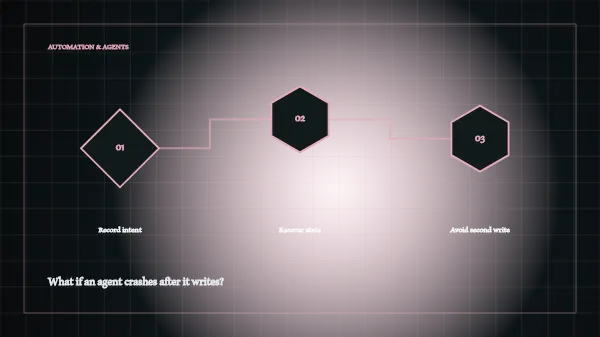
Recover a workflow that loses its own progress after an external system has already applied the change.
Automation & agents · Analysis
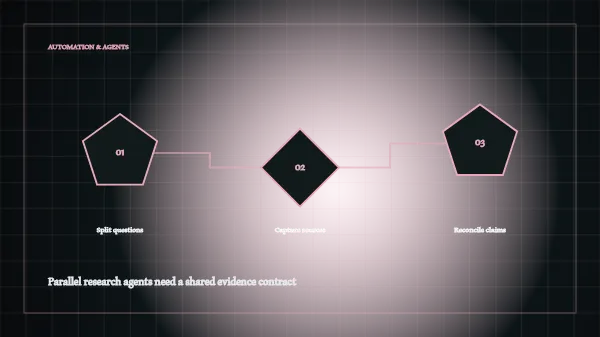
A research workflow can explore several sources at once. Its synthesis still needs dates, provenance and a rule for conflicting claims.
Automation & agents · Analysis
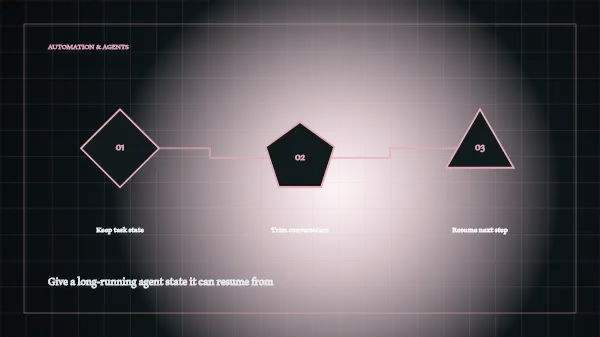
Store completed work, unresolved decisions and evidence outside the conversation so a new context can pick up correctly.
Automation & agents · Analysis
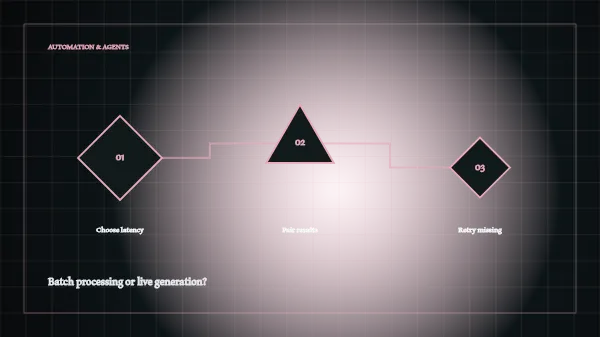
Choose async AI processing for background editorial work and a live response for tasks where someone is waiting on the screen.
Automation & agents · Analysis
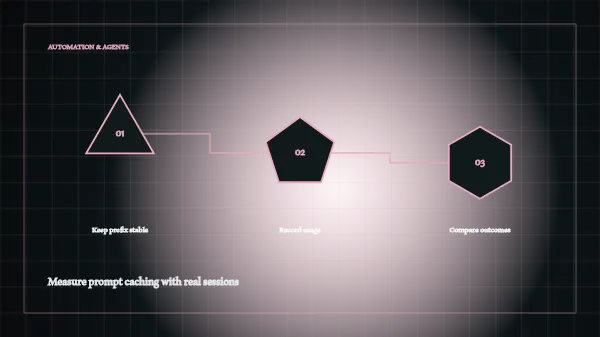
Test whether a stable prompt prefix lowers repeated work, and track latency and cost separately from answer quality.
Automation & agents · Analysis
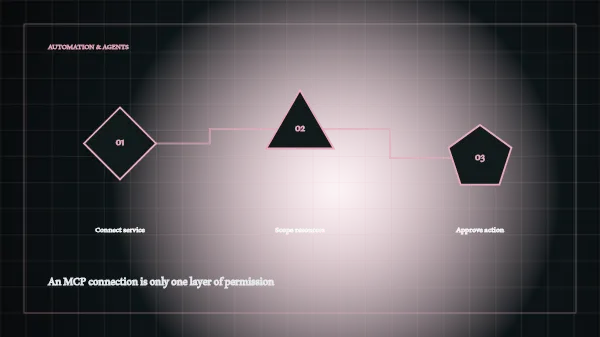
Separate server authorization, available tools and the permission to perform a particular update in an agent product.
Automation & agents · Analysis
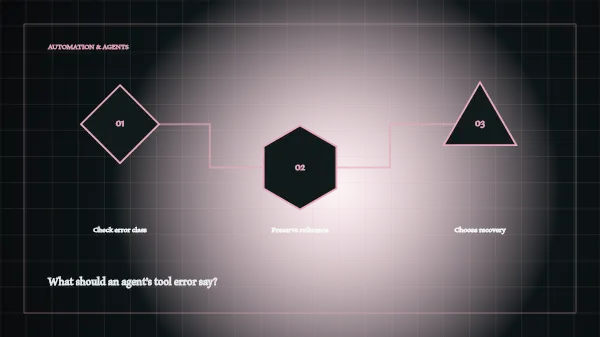
Design machine-readable tool failures that let the product distinguish an invalid request, timeout and an unknown result.
Automation & agents · Analysis
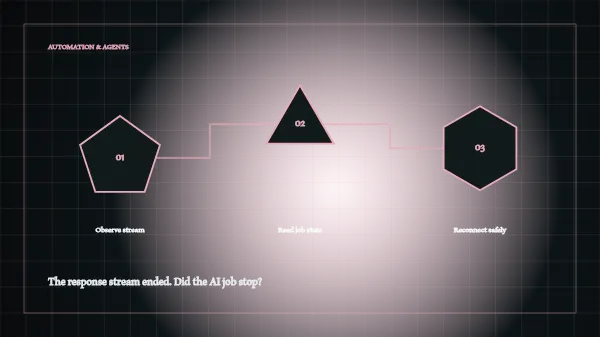
Give streaming output and durable job status separate roles in a user-facing workflow that may reconnect.
Automation & agents · Analysis
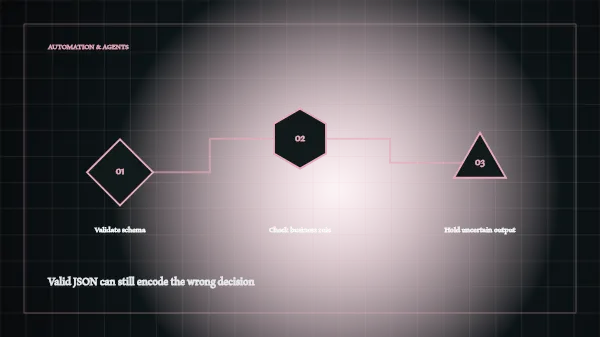
Separate structural validation from business checks before accepting a model’s decision as product input.