Product management · Analysis
One payment, three clocks
Payment approval, balance availability and bank deposit answer different questions. Give each its own state in the product.
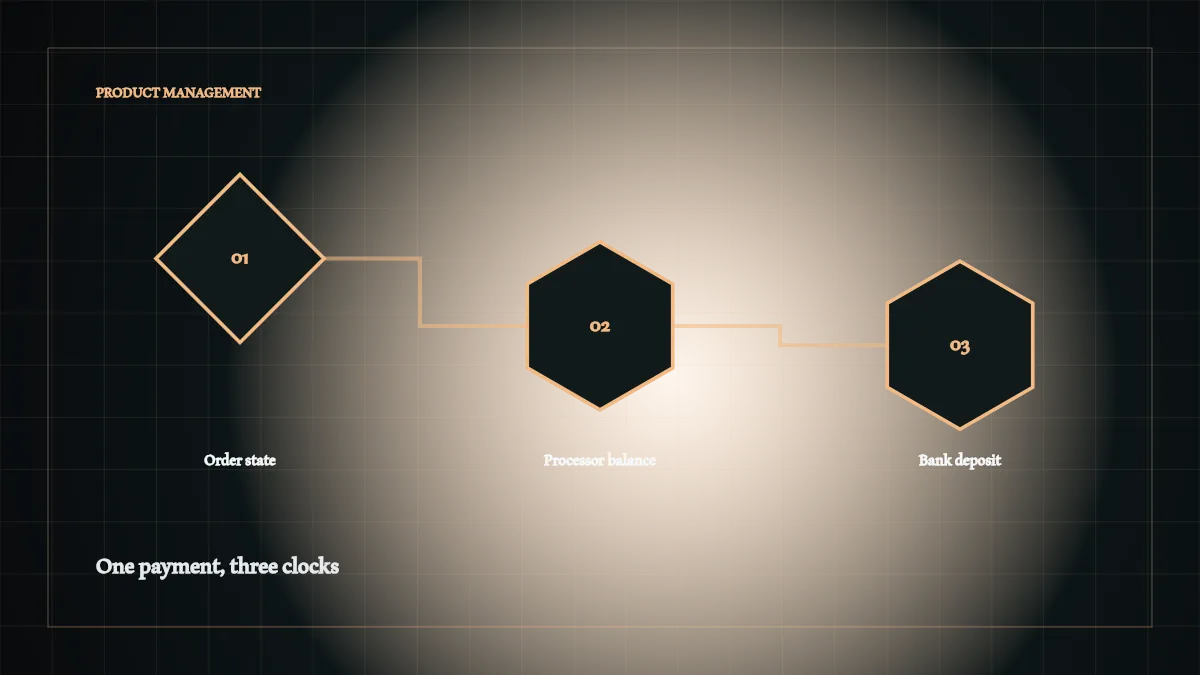
A buyer sees a paid order at 09:10. The merchant’s bank shows no matching deposit at 09:11. Both screens can be accurate. The apparent contradiction comes from using one word for three records.
What the customer bought
The order records the commercial promise. A processor’s succeeded payment can release an order for fulfillment under the merchant’s own rules. Keep an order number and the processor reference side by side, so support can find both records without asking for another payment.
Source · Stripe · PaymentIntent lifecycle
What finance received
Funds become available on the processor’s balance and can later be included in a payout. Stripe’s payout reconciliation report breaks a payout into its constituent transactions. One bank credit can cover multiple sales, fees or adjustments, which makes a one-order-to-one-deposit search unreliable.
Source · Stripe · Payout reconciliation
What support should show
Use the customer view for fulfillment and the finance view for settlement. For the edge case where support sees a successful charge but a failed payout, show a finance-owned exception and leave the order history intact.
What to take away
Give order, payment and payout separate identifiers. A fast way to test the design is to reconcile one payout containing two orders and a refund.