Product management · Analysis
When a fast transfer falls back to a slower route
Design cross-chain transfer estimates around route eligibility, confirmation policy and actual destination credit.
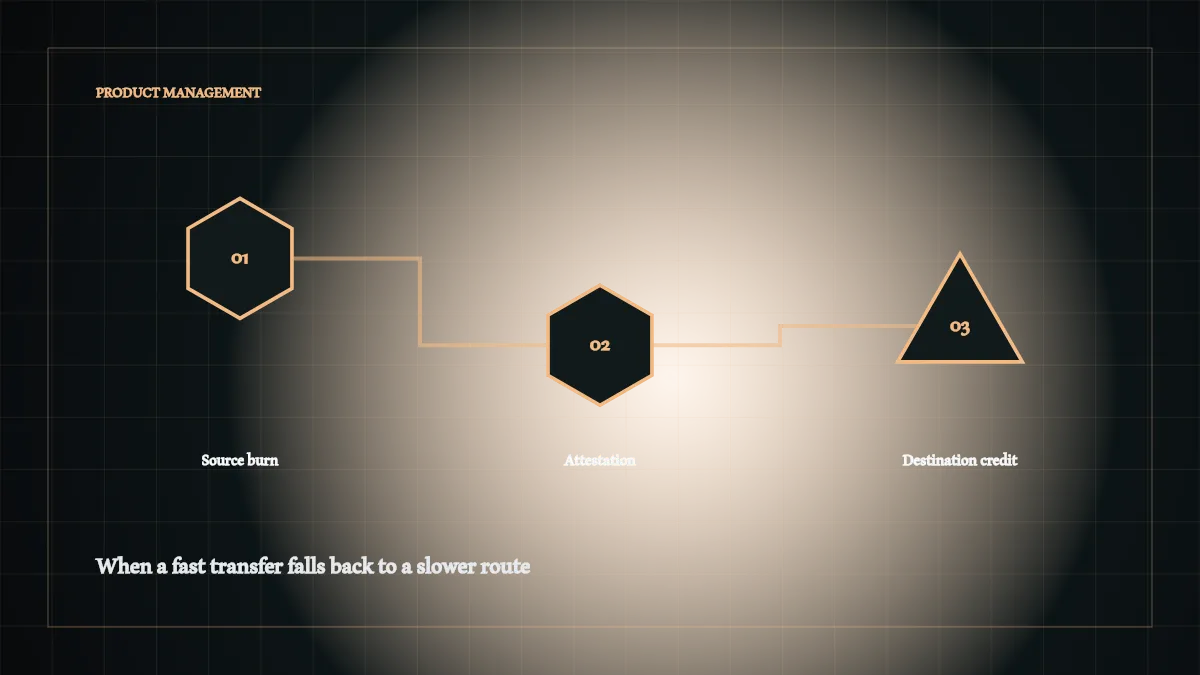
A cross-chain transfer button shows a fast route. A later attempt with the same chains takes a different path. A product that models speed as a permanent property of the network will have trouble explaining why.
Model what is actually moving
Circle’s Cross-Chain Transfer Protocol describes a burn-and-mint process for native USDC across supported chains. The destination-side issuance depends on an attestation from the source-side event. A UI with source accepted, attestation pending and destination credited gives users concrete progress markers.
Capacity can change
Circle documents a global Fast Transfer allowance rather than capacity reserved for each chain pair. The eligibility your app sees for a quote can differ from what is available when the transfer is submitted. Display the current route and its conditions, and say what will happen if the fast path is unavailable.
Source · Circle · Fast Transfer allowance
Choose an honest fallback
If a slower route changes fees or expected arrival materially, ask for a new confirmation before committing. Preserve source and destination references so a delayed mint can be investigated without telling the payer to send again.
What to take away
For release review, test an exhausted fast allowance and inspect what the customer sees before submission and after the transfer is underway.