Product management · Analysis
The stablecoin metrics a product team actually needs
Raw token movement, adjusted activity and completed customer purchases have distinct denominators and evidence.
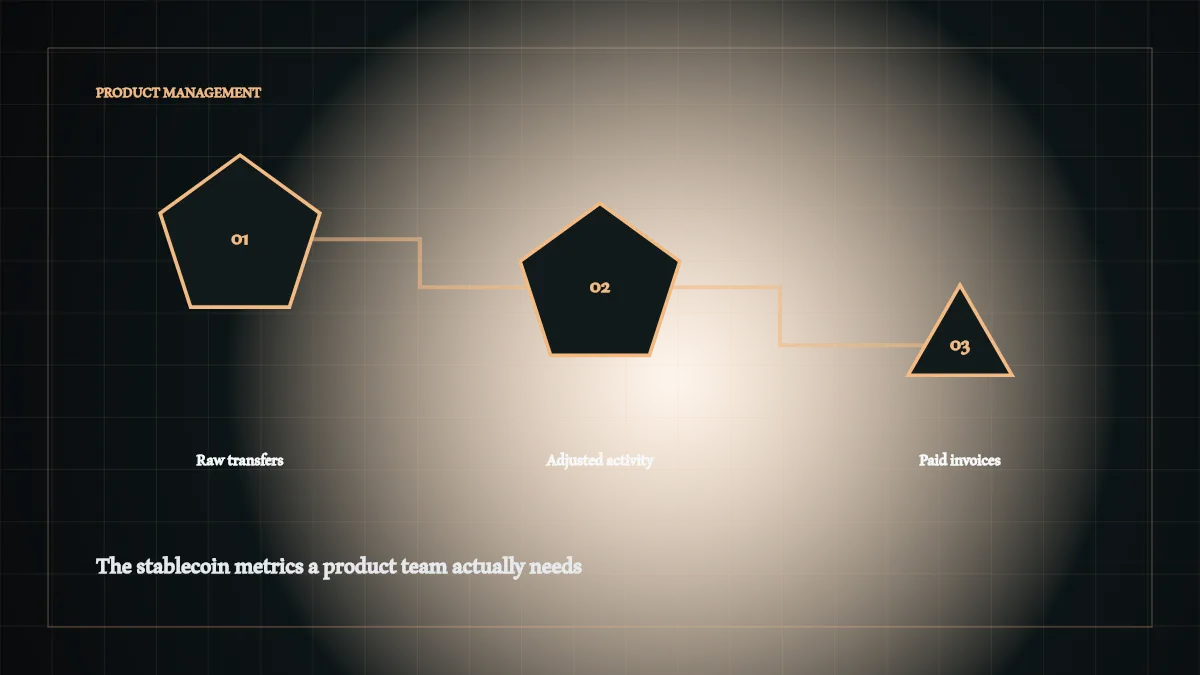
A chart of stablecoin transfers can establish that assets are moving. A merchant needs to know something narrower, such as how many distinct invoices reached settlement. Choosing the chart first can lead a team to optimize a number it does not control.
Read the footnote like a data contract
Visa’s Onchain Analytics changelog explains that refreshed labels and heuristics can change adjusted activity. CoinDesk’s November coverage of supply and payments also distinguishes raw transfers from payment activity. A comparison across dates needs a shared methodology and clear coverage.
Source · Visa · Onchain Analytics dashboard changes · CoinDesk · Stablecoin supply and payments coverage
Count a commercial object
For a checkout funnel, count distinct invoices at creation, payment acceptance and settlement. Keep the token transfer as evidence attached to that object. One customer invoice can generate multiple movements as funds route through a provider.
Give analysts an audit case
Select a day with a refund, a repeated callback and an internal treasury move. Ask a second analyst to reproduce the KPI from the same records. Document whether refunds restate earlier periods or enter the current period separately.
What to take away
Start the weekly report with the count’s unit: invoices, payment attempts, users or transfers. Keep denominators visible even when a chart has room for only one headline.