Product management · Analysis
A payment timeout is an unknown result
A timeout may hide a completed payment. Build a retry experience that distinguishes repetition, recovery and a new purchase.
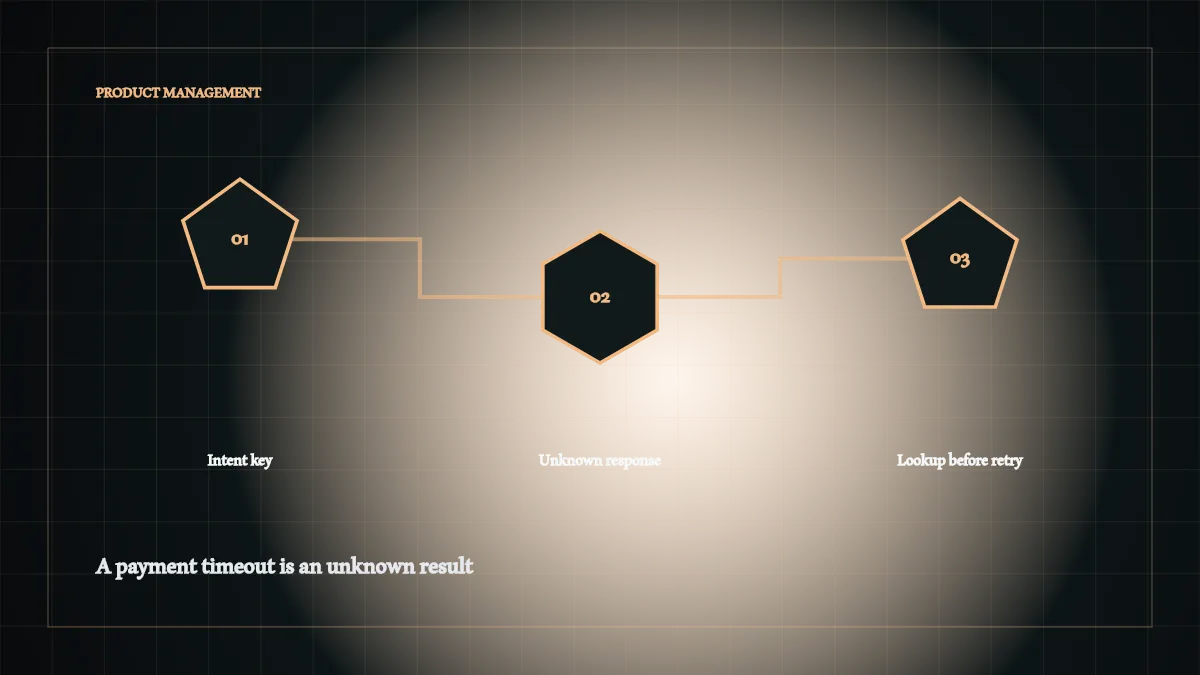
The network times out after a buyer confirms a purchase. The button becomes available again, even though the app cannot tell whether the processor recorded the original call. A second click has an ambiguous meaning.
Preserve the commercial intent
Record one merchant order before the payment call. Attach the same request key to retries of the same operation and parameters. Stripe documents that its v1 API can replay the earlier result for a retained key, including a failure response after execution has begun.
Source · Stripe · Idempotent requests
Check the persistent state
A timed-out screen deserves an explicit checking state. Retrieve the authoritative payment or order record and decide whether the shopper can resume, see a receipt or create a distinct attempt. The processor’s lifecycle provides more useful evidence than the timeout itself.
Source · Stripe · PaymentIntent lifecycle
Change input deliberately
A different total, recipient or cart is a new commercial decision. Store a fresh attempt with an explicit link to the superseded one, and keep the order invariant in your database. The provider’s key retention window cannot substitute for your own lasting order record.
Source · Stripe · Idempotent requests
What to take away
Test with a response dropped after the processor accepts a request. Measure the number of commercial orders and the number of downstream fulfillment actions.