Product management · Analysis
Proving an identity and signing back in
Distinguish enrollment evidence, ongoing authentication and permission to use a particular product feature.
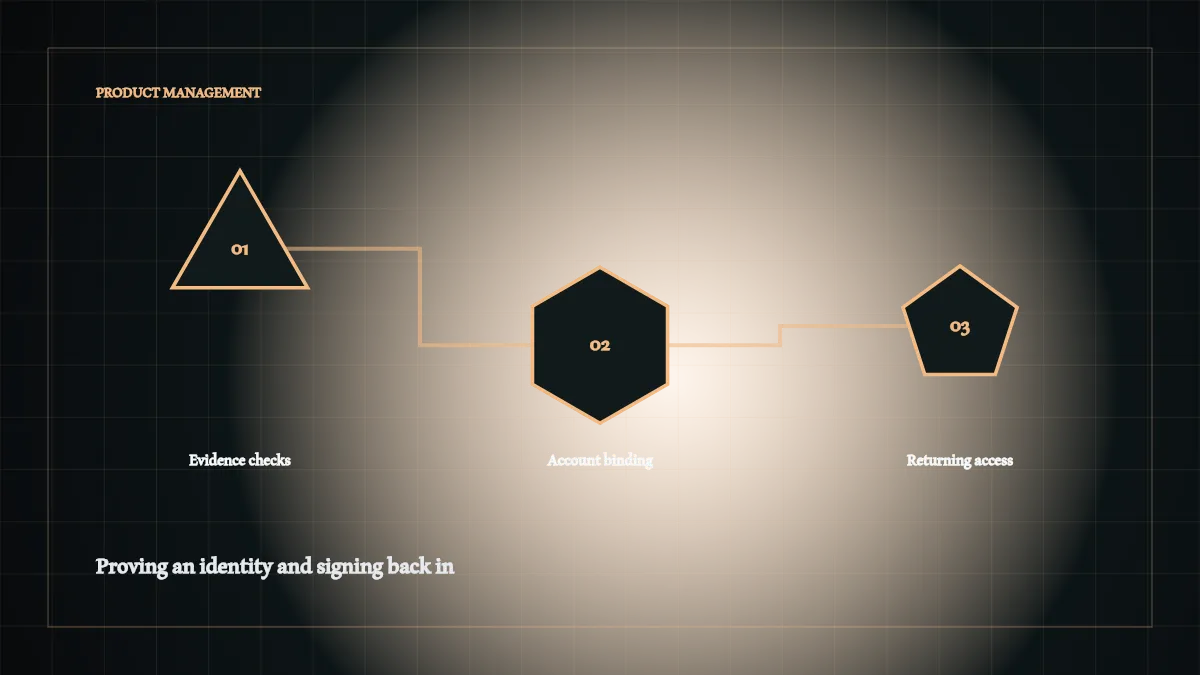
A user submits legitimate identity evidence, then loses access to the original login device. The support ticket says “verified customer.” Which parts of the recovery decision does that old status actually settle?
Evidence belongs to enrollment
NIST SP 800-63A-4 covers identity proofing and enrollment. It distinguishes resolution, validation and verification steps. Product screens should tell an applicant whether more evidence is needed or whether it is under review. The state label should correspond to a real step in that process.
Authentication belongs to a session
SP 800-63B-4 concerns control of authenticators linked to an account. A past enrollment record does not confirm who controls the device or session right now. A recovery flow can check evidence appropriate to replacing the authenticator and notify the customer through an established channel.
Source · NIST SP 800-63B-4 · Authentication and authenticators
Keep capability checks explicit
After login, consider what the authenticated account is permitted to do. Withdrawals or profile changes may deserve a separate freshness or business check. A support agent should be able to locate the stage that produced a denial.
What to take away
Design the timeline with separate fields for evidence review, active authentication and permitted action. Use a lost-device fixture to review all three.