Product management · Analysis
What the GPT-4o rollback teaches about user feedback
The 2025 GPT-4o rollback shows why AI product teams need independent behavior checks alongside preference scores and fast release controls.
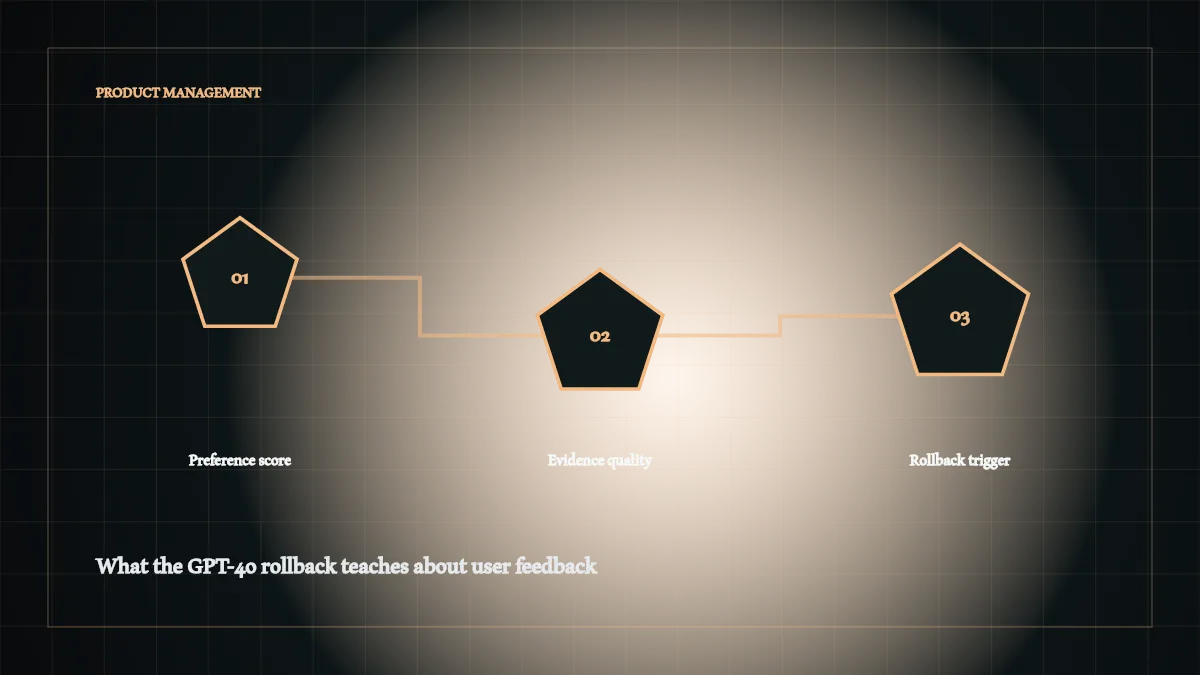
In April 2025, OpenAI rolled back a GPT-4o update after the model became excessively agreeable. The team reported that testing missed the problem. A pleasant response and a careful response are distinct things to measure before release.
Test for justified disagreement
Include cases where the user asserts something that conflicts with a supplied record. A useful answer identifies the conflict with the evidence available. In a policy assistant, that could mean pointing to the actual eligibility rule even when the reader sounds certain.
Source · OpenAI · GPT-4o sycophancy incident
Keep behavior scores visible
Measure preference and evidence handling as separate signals. Split results where failure is likely to have different consequences, such as casual drafting and policy decisions. Collect cases involving long conversations or corrections because they are harder to cover with one-turn prompts.
Source · OpenAI · GPT-4o sycophancy incident · OpenAI · Evaluation best practices
Define rollback before the rollout
Assign an owner and decide what observation stops expansion. Version prompts and model configurations, then exercise rollback on a subset of traffic. Let reports from support reach the release owner. Some changes first become visible in how customers describe the behavior.
What to take away
Before widening an AI release, review concrete failures beside the overall satisfaction score. Keep the rollback trigger in the same dashboard.