Applied AI · Guide
Testing AI transcripts for Persian work meetings
Measure recognition errors in Persian meetings, then score names, deadlines, and action-item owners separately before sharing a generated transcript.
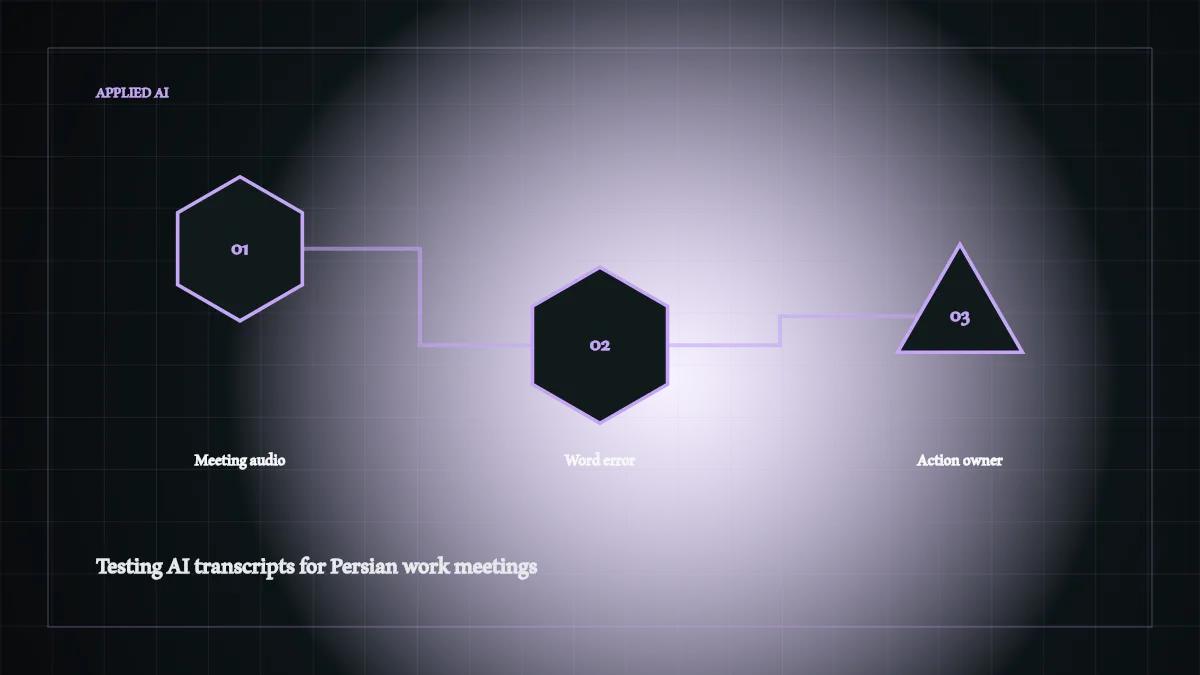
A transcript can read fluently and still attribute a deadline to the wrong person. In mixed Persian and English meetings, product names, calendar dates, and overlapping speech deserve their own tests because they drive the work that comes afterward.
Start with a touchstone recording
Take consented clips across clean audio, room echo, overlapping speakers, and code-switching. Manually write reference transcripts before inspecting model output. Keep the recorded utterance and a separate normalized comparison copy so differences in Persian numerals and spacing remain visible.
Score the consequence as well as the words
Use word error rate as a baseline and define word splitting and spelling normalization. Then mark the exact owner, date, and action for each assigned task. For a synthetic example, moving the same deadline from Elaheh to Elham is a critical error even if the rest of the sentence matches.
Include pauses and music
The Whisper model card describes the possibility of text appearing when it was never spoken. Include segments with silence, background noise, and an open microphone. Send uncertain action items to the relevant participant with the original timestamp before treating them as commitments.
Source · OpenAI — Whisper model card
What to take away
The release criterion is a dependable record of who promised what by when. Meeting transcripts and action items need separate scores.