Applied AI · Guide
How I would audit an AI-generated audio briefing
Check a generated NotebookLM Audio Overview against a small source pack, with special attention to numbers, exceptions, attribution, and listening context.
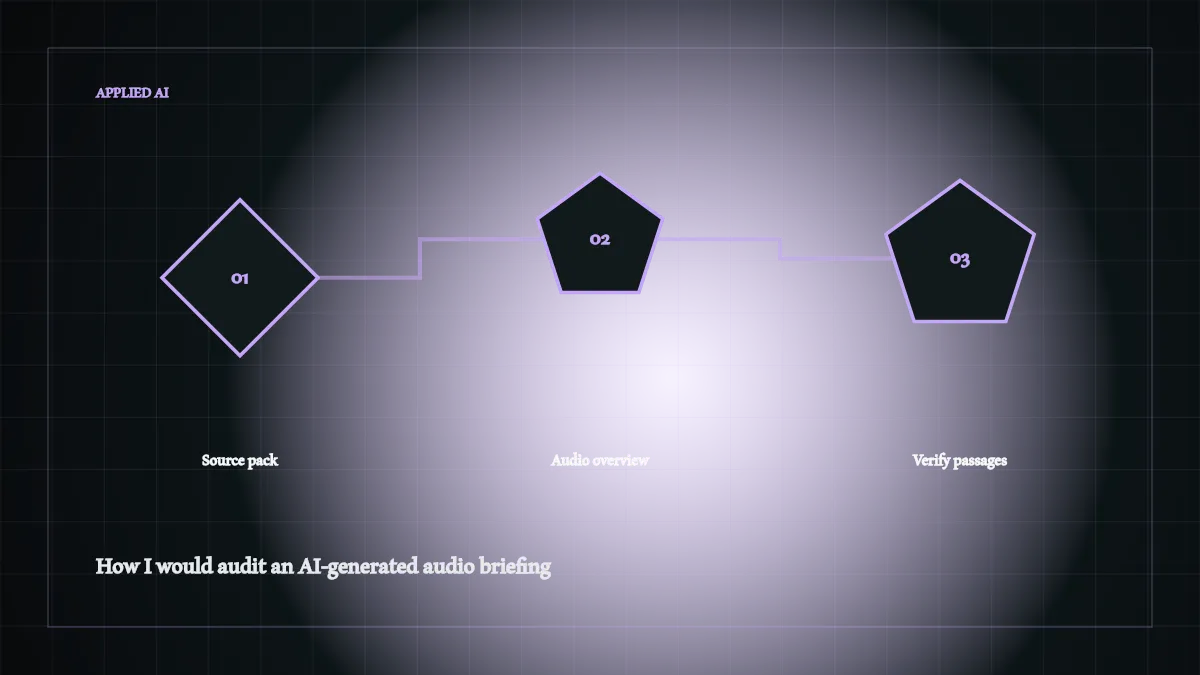
Google introduced NotebookLM Audio Overviews in 2024 as spoken discussions generated from notebook material. Listening can help someone get acquainted with a long packet, but the ease of following a conversation can also make a small change in wording hard to catch.
Choose three documents with different roles
For a sample brief, use an original study, a correction, and a short methods note. Before listening, list the few details a listener should leave with: which figure changed, why it changed, and which claim remains uncertain. Save the exact source documents used to generate the overview.
Source · Google — NotebookLM Audio Overviews
Record what someone actually hears
Listen without opening the files, jot down statements in the audio with timestamps, and look for each in the source pack afterward. Pay particular attention to implied agreement between speakers, denominator changes, and conditions that disappear in a conversational retelling.
Add a companion usefully short enough to read
Publish three or four linked statements with page references, corrections, and uncertainty visible. For a weekly team brief, prompt a reviewer to confirm decisions and dates from the written source before action. The audio can orient the team while the written record gives them something stable to cite.
What to take away
An audio briefing is ready to share when someone who heard it can recover the evidence for the decisions that matter.