Applied AI · Guide
A meaning test for AI-translated product instructions
Score translations for directional terms, negation, and required actions with synthetic cases a reviewer can adjudicate, using automated metrics as one input.
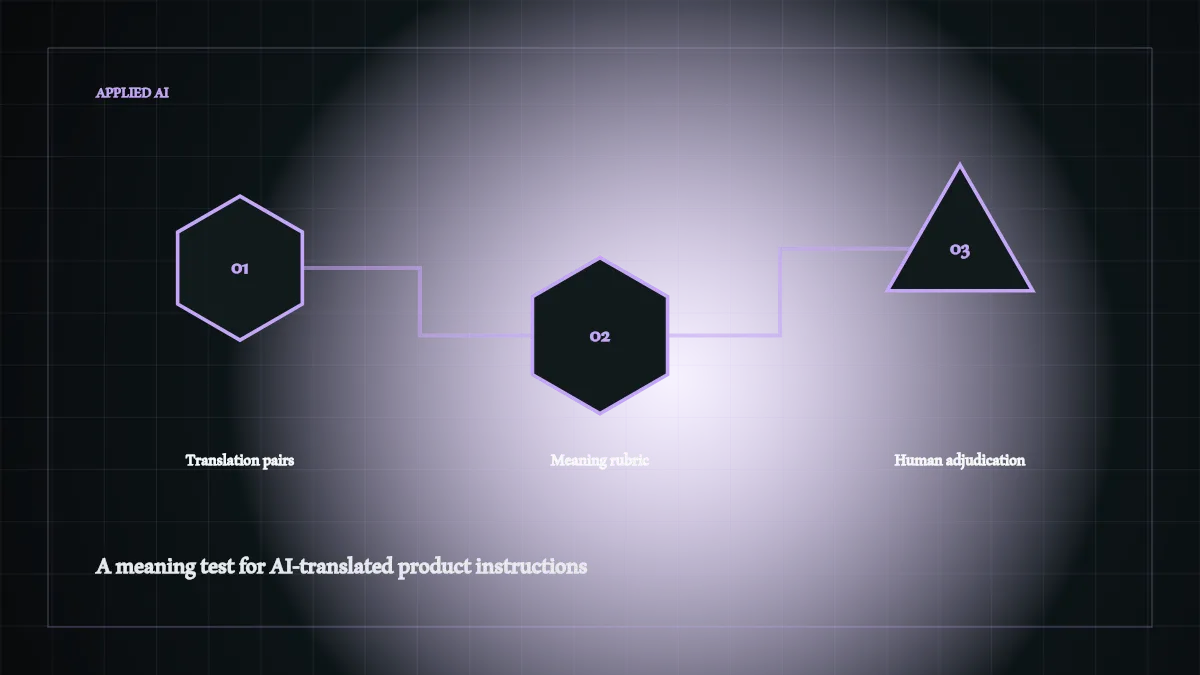
A localized onboarding screen can sound polished while reversing an instruction. For a product team, a machine translation evaluator earns its place by identifying which passages can safely guide an action.
Separate fluency from meaning
WMT 2025 tested automatic translation evaluation against human judgments in a shared task. A local gate needs pairs where fluency and meaning can diverge. Add examples such as “the amount must be less than 50” versus “up to 50 is allowed” and a sentence that reverses which account sends a confirmation.
Write the semantic requirement beside each pair
For a strict threshold, acceptance of the boundary value is the critical mistake. For a two-party action, identify sender and recipient explicitly in the rubric. Add an example with missing negation and a shorter but accurate rewrite to see whether a grader rewards the original length.
Ask a local reviewer to resolve ties
Compare independent reviewer judgments before relying on an automated rank. Track severe meaning errors separately from style preferences and analyze conflicting cases with the product owner. Keep examples from multiple screens so the test covers context and stays independent of one translation prompt.
What to take away
A good translation scorecard predicts whether a user would take the intended action and makes severe failures easy to review.