Applied AI · Analysis
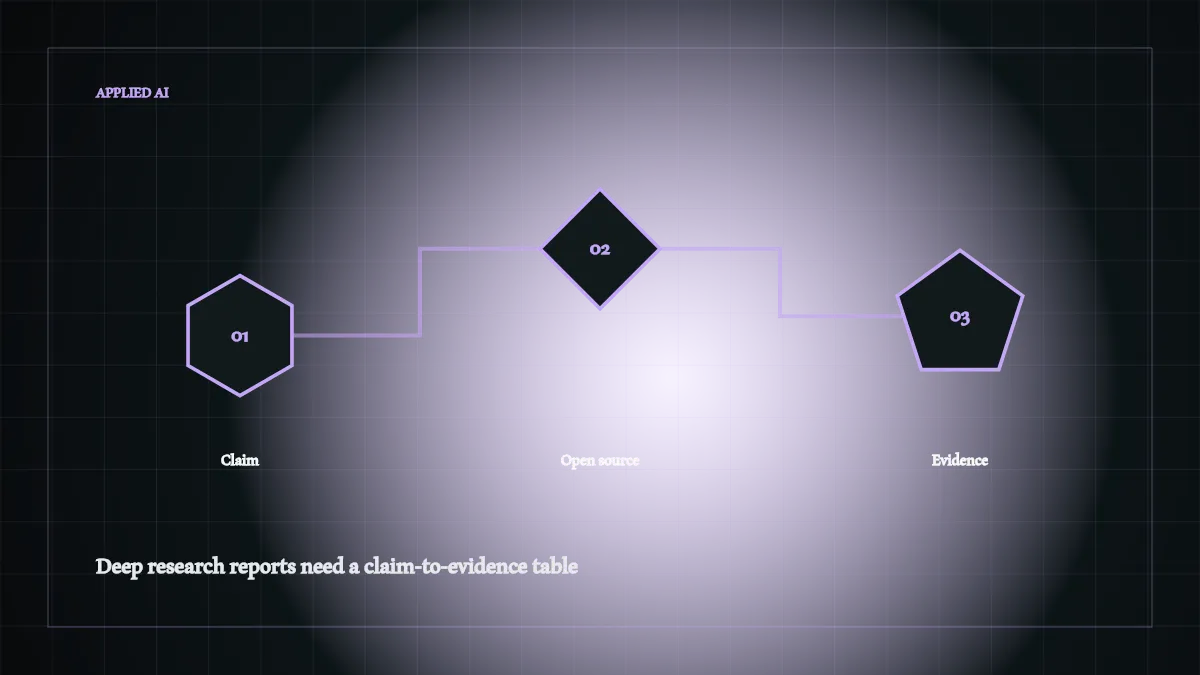
Deep research reports need a claim-to-evidence table
Turn a sourced AI report into evidence you can defend by checking dates, populations and the exact language behind every claim.
When OpenAI introduced deep research in February 2025, the ability to produce a linked report was part of the pitch. TechCrunch raised a question at launch that still matters for anyone using the output in a brief: does a link actually substantiate the sentence beside it?
What the launch documented
OpenAI described a system that searches and synthesizes online material and returns citations. It also disclosed errors such as difficulty calibrating uncertainty. The report gives an editor an audit trail with specific links to open. Factual assurance still comes from checking the underlying sources.
Source · OpenAI — Introducing deep research · TechCrunch — Deep research at launch
Three columns that expose weak claims
Write one row per consequential claim, with the report’s wording, a source passage paraphrased faithfully, and a verdict. Suppose a press release says 40% of surveyed firms plan a pilot and the draft says 40% deployed. The source population is correct and the verb changes the finding. Record the corrected verb explicitly.
Publish the evidence that survives the check
Open the original study before copying a number from coverage. Preserve the figure’s date and denominator, and label a vendor’s claim as vendor-reported. If a PDF is inaccessible or the table excludes the group under discussion, leave the claim open or remove it. This works for purchase comparisons and analyst briefs as well as articles.
What to take away
Keep the table with the final brief. A second reader should be able to trace each consequential sentence to a source and see precisely what still requires verification.