Security · Update
When a surprise AI bill is a security incident
Mandiant observed rapid billing spikes from cloud and model resource abuse. Check what can distinguish unexplained use from an expensive release.
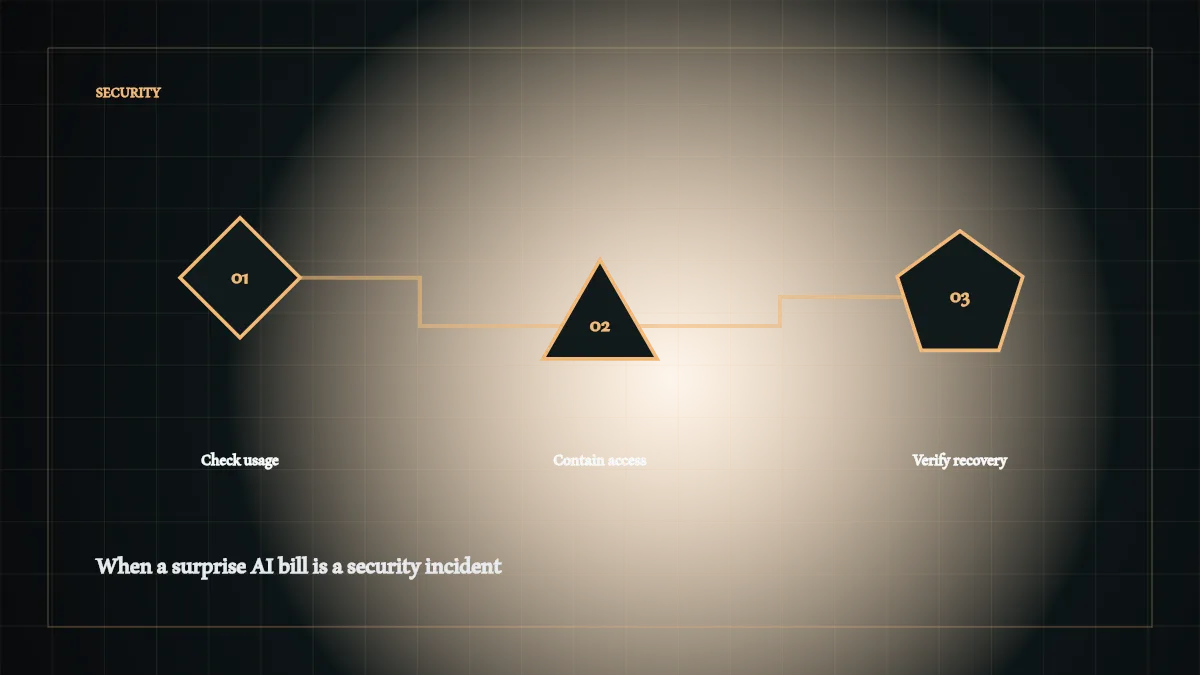
In its November 16 threat update, Google and Mandiant reported investigations where attackers consumed other organizations’ cloud compute or model capacity. Some incidents produced significant charges within hours. This makes billing a valuable signal even when a customer-facing product still works.
Check the shape of the increase
Compare the model usage and cost window with deployments, background jobs and expected user traffic. An unplanned identity, project or region deserves prompt review. Billing data can arrive late, so compare it with the live usage and authentication records you already collect.
Source · Google Threat Intelligence and Mandiant · AI threat tracker
Decide who can pause spending and isolate access
Know which team can restrict affected credentials, review cloud audit records and contact the provider. Preserve logs while narrowing the affected scope. Limits by service or project and alerts with a named recipient can shorten the delay between a spike and a human seeing it.
Source · Google Threat Intelligence and Mandiant · AI threat tracker
Check that the explanation fits the recovery
After the response, compare the usage trend with the expected baseline and review whether other projects shared the same access. Legitimate automation can also drive unplanned cost. The incident record should make clear which evidence distinguished compromise from a product or configuration change.
Source · Google Threat Intelligence and Mandiant · AI threat tracker
What to take away
A sudden bill is a reason to check identity and usage together. Have someone responsible for that check before the alert arrives.