Security · Update
Is that outage an AI-driven DDoS? What November’s reports can establish
Cloudflare and Google report different kinds of incidents. Learn what distinguishes a traffic surge, a confirmed DDoS and evidence of AI involvement.
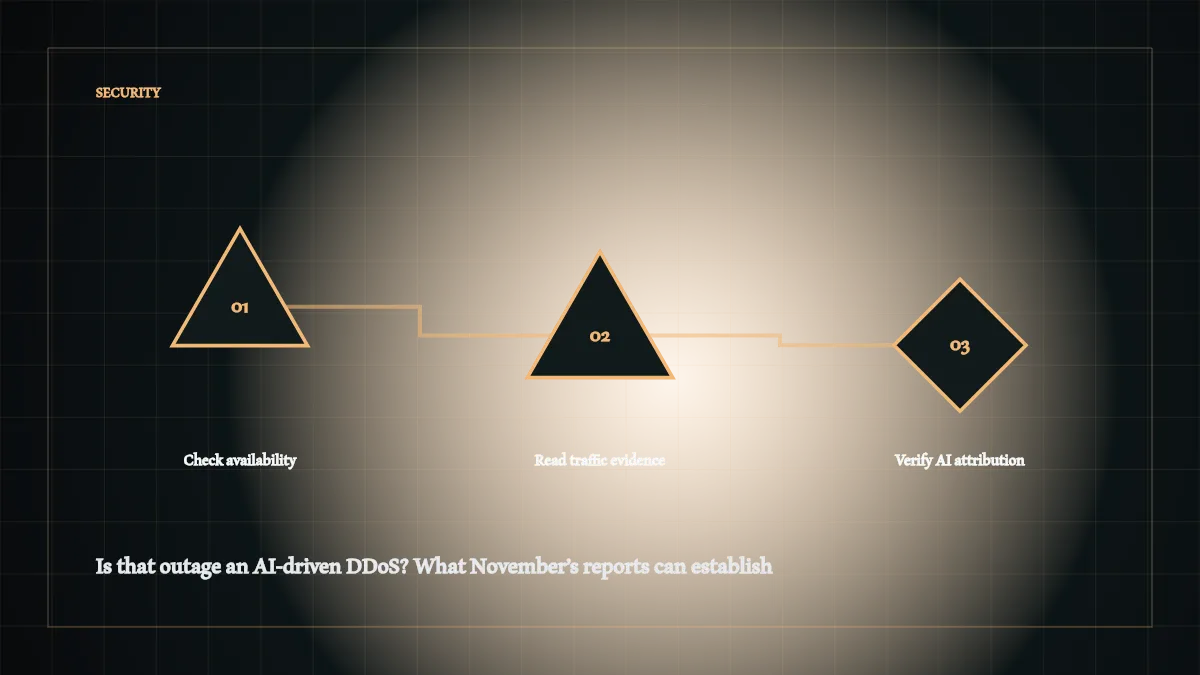
When a checkout or news site stops responding, “AI attack” can spread faster than the incident report. In November 2026 Cloudflare published a useful comparison from U.S. election sites it covered, while Google and Mandiant separately described observed uses of AI in intrusions.
A surge can come from real readers
Cloudflare saw roughly 602 million requests to covered state and local election sites on November 3. It recorded no significant DDoS on Election Day across more than 1,400 covered election-related sites. It did record a significant incident the day before, against a candidate site. The figures describe Cloudflare’s coverage and do not imply that every site was observed.
What would justify mentioning AI?
Cloudflare’s quarterly report describes network-layer attacks observed on its platform. Google and Mandiant document AI involvement in separate investigations. Putting those findings side by side does not identify the generator of traffic in a particular outage. That attribution requires incident-specific evidence connecting a model or agent to the activity.
Source · Cloudflare · Q3 2026 DDoS threat report · Google Threat Intelligence and Mandiant · AI threat tracker
What a customer can check
Open the provider’s status page and compare timing before passing on a claim about the cause. A website operator can correlate edge protection events, application errors and whether legitimate requests failed. Keep the observed service impact and the cause hypothesis in separate incident notes until the evidence converges.
Source · Cloudflare · November election traffic report · Cloudflare · Q3 2026 DDoS threat report
What to take away
If the only public evidence is downtime or a traffic spike, describe the impact and leave the cause open.