Crypto guides · Analysis
Why your Ethereum gas cap is higher than the fee you paid
Separate gas units from price per unit, and read your transaction’s gas limit, fee cap and actual paid fee without mixing them.
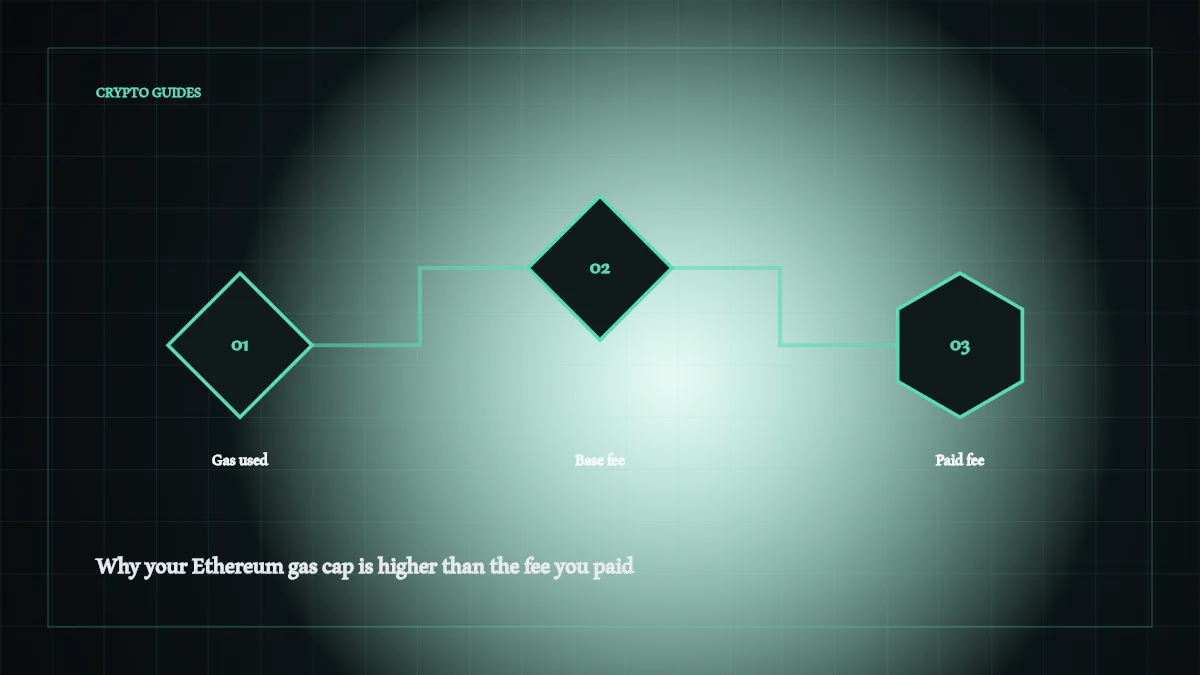
Before sending an Ethereum transaction, a wallet may show a fee estimate and a larger maximum. After inclusion, the receipt can show a smaller charge. None of those numbers can be interpreted well until you separate the gas budget from the price per unit.
Two controls with different units
Gas limit is a cap on execution work measured in gas units. Under EIP-1559, max fee per gas caps the amount you allow per unit. The priority fee cap bounds the tip, and the current base fee is part of the effective per-unit price.
Use the receipt for the realized cost
For a normal EIP-1559 execution fee on Ethereum, multiply gas used by the effective gas price recorded for the included transaction. The initial gas limit times the max fee is a ceiling calculation, not what you automatically pay. Some other fee components, such as blob fees, have separate rules.
Source · Ethereum EIP-1559 fee-market specification · Ethereum.org transaction documentation
Low gas and low price fail differently
An insufficient gas limit can produce an out-of-gas execution and still consume gas. A fee cap below the prevailing base fee can prevent inclusion while that condition holds. A wallet’s estimate describes the transaction under its current assumptions.
Source · Ethereum EIP-1559 fee-market specification · Ethereum.org transaction documentation
What to take away
When comparing costs, compare the same network and transaction type, and use the receipt rather than the wallet’s maximum estimate.