Blockchain research · Analysis
What a blob fee measures on Ethereum
Distinguish Ethereum execution gas from blob gas, and understand why cheaper data publication does not dictate one universal L2 transaction fee.
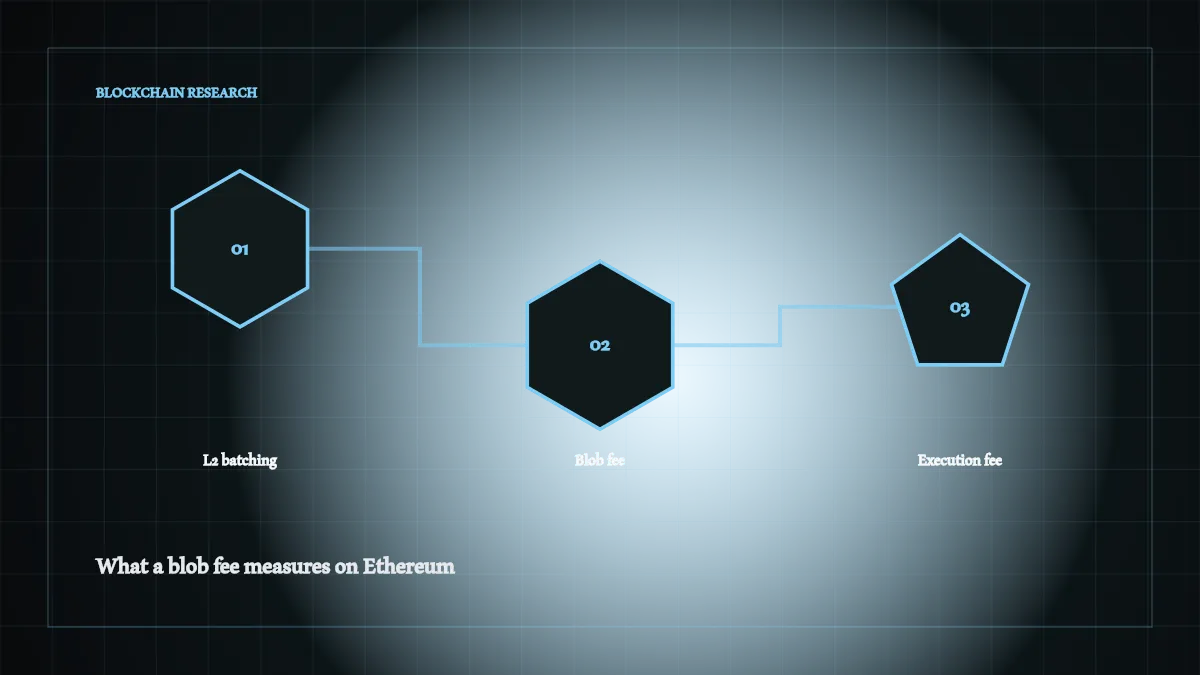
A chart says Ethereum blobs are cheap. A wallet still quotes an L2 transaction fee that seems high. Both observations can be valid in a system where the user pays a price for several things and the rollup manages how transactions are batched for publication.
Blob gas pays for a different resource
EIP-4844 introduced blob-carrying transactions and a separate market for blob gas. That market prices data availability used by rollups and has its own fee controls. Ordinary Ethereum execution still has the gas accounting and fee market associated with transactions.
Source · Ethereum EIP-4844 shard blob transaction specification · Ethereum EIP-1559 fee-market specification
User costs also depend on the rollup
A rollup’s quote can incorporate L2 execution, publication cost and other network-specific policy. Batch utilization and the allocation method change how a publication expense translates to an individual transaction. Compare the quote for the specific chain and action.
Source · Ethereum EIP-4844 shard blob transaction specification
Estimate with at least two different operations
For a product forecast, track a simple transfer and a contract-heavy action separately. Log the quote and actual paid fee alongside the chain and time. An aggregate blob price can add context when you explain a change in cost.
What to take away
Keep the unit in the chart label. Blob gas, Ethereum execution gas and a user’s quoted rollup fee answer different questions.