Blockchain research · Analysis
Who pays when a wallet says a transaction is gasless?
Trace an ERC-4337 UserOperation across the wallet, bundler and paymaster to understand sponsorship and how it can be refused.
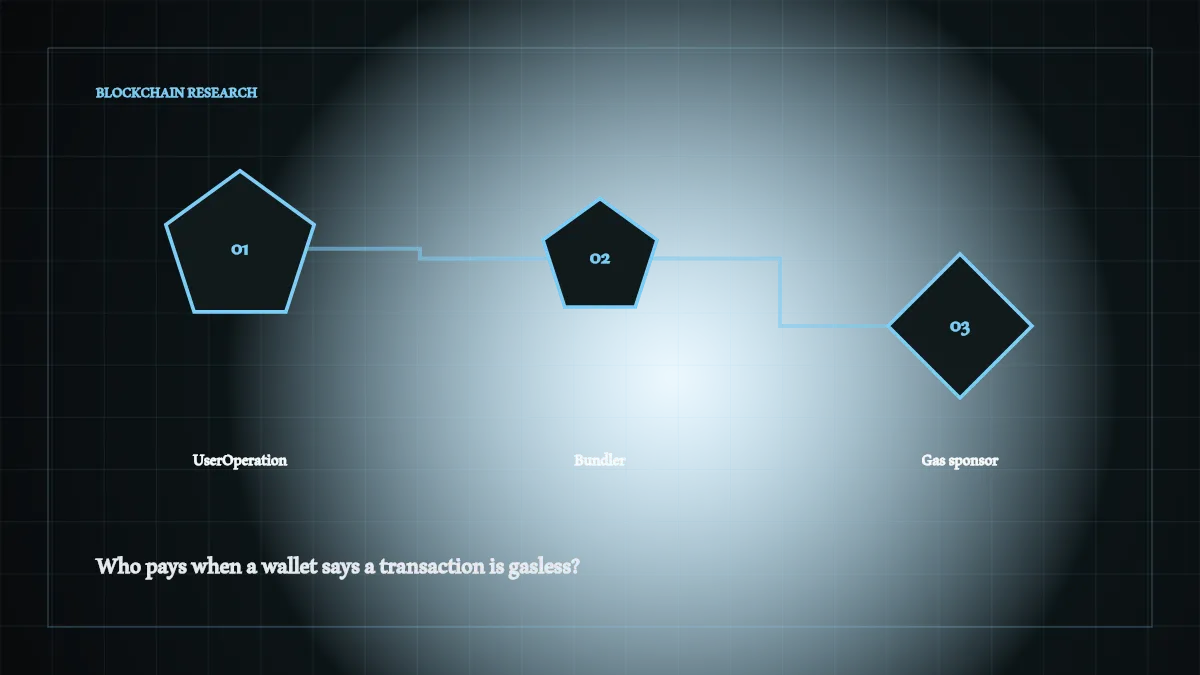
A wallet shows a “no gas” button. The operation still consumes resources on-chain. The useful design question is who covers the network cost and which rule makes the sponsorship available for that particular action.
Follow the UserOperation to the entry point
ERC-4337 describes how a smart account’s UserOperation can be included by a bundler via the EntryPoint contract. The account logic validates authorization, and other parties can take part in paying for execution under the standard’s rules.
Look at the paymaster’s decision
A paymaster can agree to sponsor a proposed operation and apply validation logic. A product can constrain the operation to specific methods, users or spending policies. Sponsorship may fail even when the account also has a valid way to authorize the action.
Design the user’s fallback before promising coverage
For a sponsored onboarding path, test approval, rejection, transient errors and a later retry. Decide whether the interface should offer a fee-paying fallback, a non-transactional route, or a clear explanation of unavailability. Show what the user would pay before that fallback is submitted.
What to take away
Describe who pays and when eligibility is decided. A “gasless” promise is strongest when the product also makes the failure and fallback states understandable.