Crypto guides · Analysis
Does an NFT contain the image you see?
Read an ERC-721 token’s chain, contract, token ID and metadata separately to understand what ownership data actually refers to.
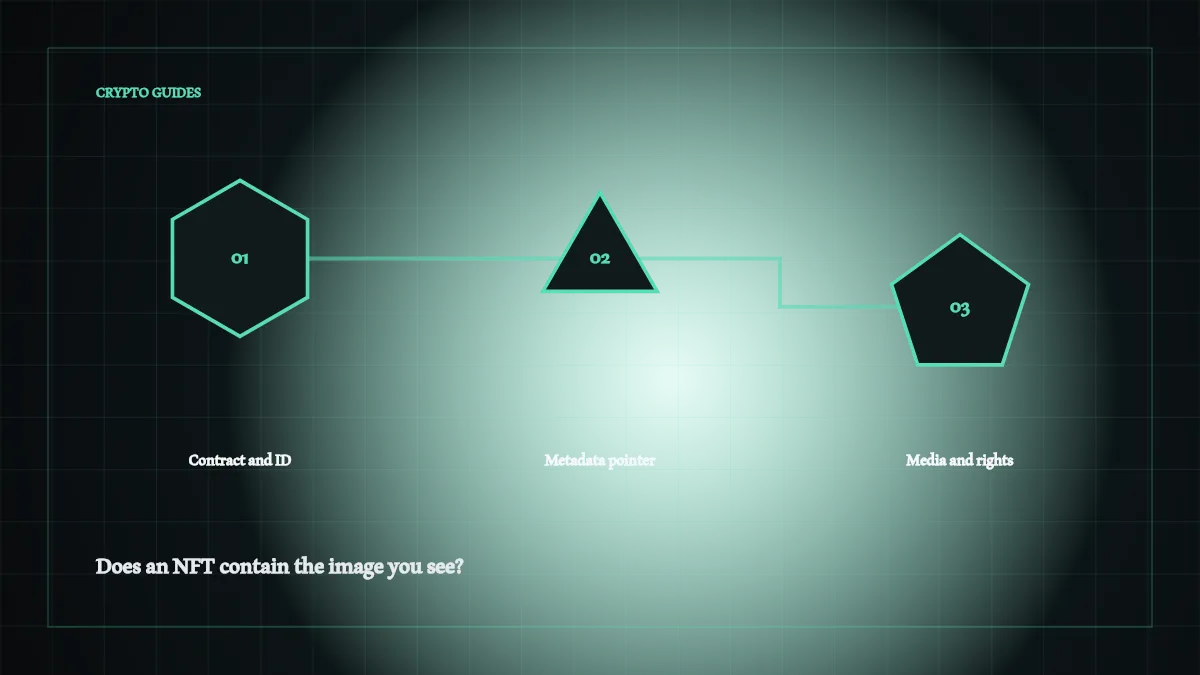
An NFT gallery shows a picture, a price and a collection name in one card. A user can easily read this as a single object. ERC-721 describes token ownership and optional metadata, but the image and any use rights often depend on additional layers.
Token identity starts on-chain
Inside an ERC-721 collection, the token ID identifies a specific token under that contract. Across collections or chains, the same ID can recur. Use the network, contract and ID together when comparing records.
Source · Ethereum ERC-721 ownership and metadata specification
The URI points to metadata
The optional metadata interface exposes a token URI. That URI can return structured data with an image pointer. The contract and hosting choices determine whether references can change, and whether a media file will remain accessible. Look at the actual URI instead of assuming a specific hosting model.
Source · Ethereum ERC-721 ownership and metadata specification
Read any rights separately
A marketplace rendering is evidence of what it displayed at that time. Check the collection’s published terms for any reproduction or commercial permissions and retain the token identifiers when documenting the purchase.
What to take away
Before relying on an NFT record, identify the exact token, resolve its metadata, and look for a separate license if use rights matter.